
don't play DnD 5e.
I'm anti-D&D5e. Spend too long in the ttrpg community, and you'll hear the same thing from a lot of people - D&D 5e is really poorly designed! And that would be fine - you can play whatever makes you happy, you know? I played 5e for a long time! But the problem with that is it's the ttrpg standard, you know? For people who have never heard of Call of Cthulhu, or Cyberpunk, or Pathfinder - new ttrpg players - D&D is their entry system!
And it's a clunky, non-intuitive system! You need three books to play, minimum, and each one is $76 AUD!!!
And even that would be fine (it's not). If only it wasn't marketed as the catch-all system for table-top roleplay. It's super not! You see people homebrewing stuff that's so completely distinct from the original system it might as well be a different game.
And then, sometimes, it acutally is! A lot of 'homebrew' fixes for 5e are just 1:1 with Pathfinder mechanics. Like, just play Pathfinder!
But that's the problem right there - whenever you play D&D, the pressure on the person running the game is utterly overwhelming. You're expected to track everybody's character abilities, the adventure (you better hope it's balanced, and that you don't need to fix that, too), the many, many conditions and spells and specific rule interactions. This is not the standard! There are plenty of ttrpg's that go out of their way to make it deliberately easy and intuitive for the person running the game!
Wizards of the Coast are my personal enemies for what they did to that game. The marketing for it gives you come in with incorrect assumptions! Of course you're going to have a bad time! Savageland' is a 2015 American mockumentary zombie horror film, and my second favourite horror movie ever as of writing this blog post.
For those who haven't seen it, it follows the unexplained massacre of an entire town on the US-Mexico border - everyone save Francisco Salazar, an amateur photographer and illegal immigrant. There's no overt gore or violence except for the photos Salazar took on the night, and these are blurry and distorted. Salazar is accused of the massacre, and taken to trial on unfair and flimsy evidence. The tension and suspense comes from both the American justice system, as well as the slow piecing-together of the true, supernatural events of June 2, 2011, in the town of Sangre De Cristo.
The movie is told through the lens of journalist reports, interviews with the bigoted law enforcement, and with those close to the town. If you like slower horror, with less gore and more suspense - think Lake Mungo - go watch it!! It's an hour twenty minutes, and right now it's on youtube for free here.
Spoilers (and *gasp* - opinions) below!
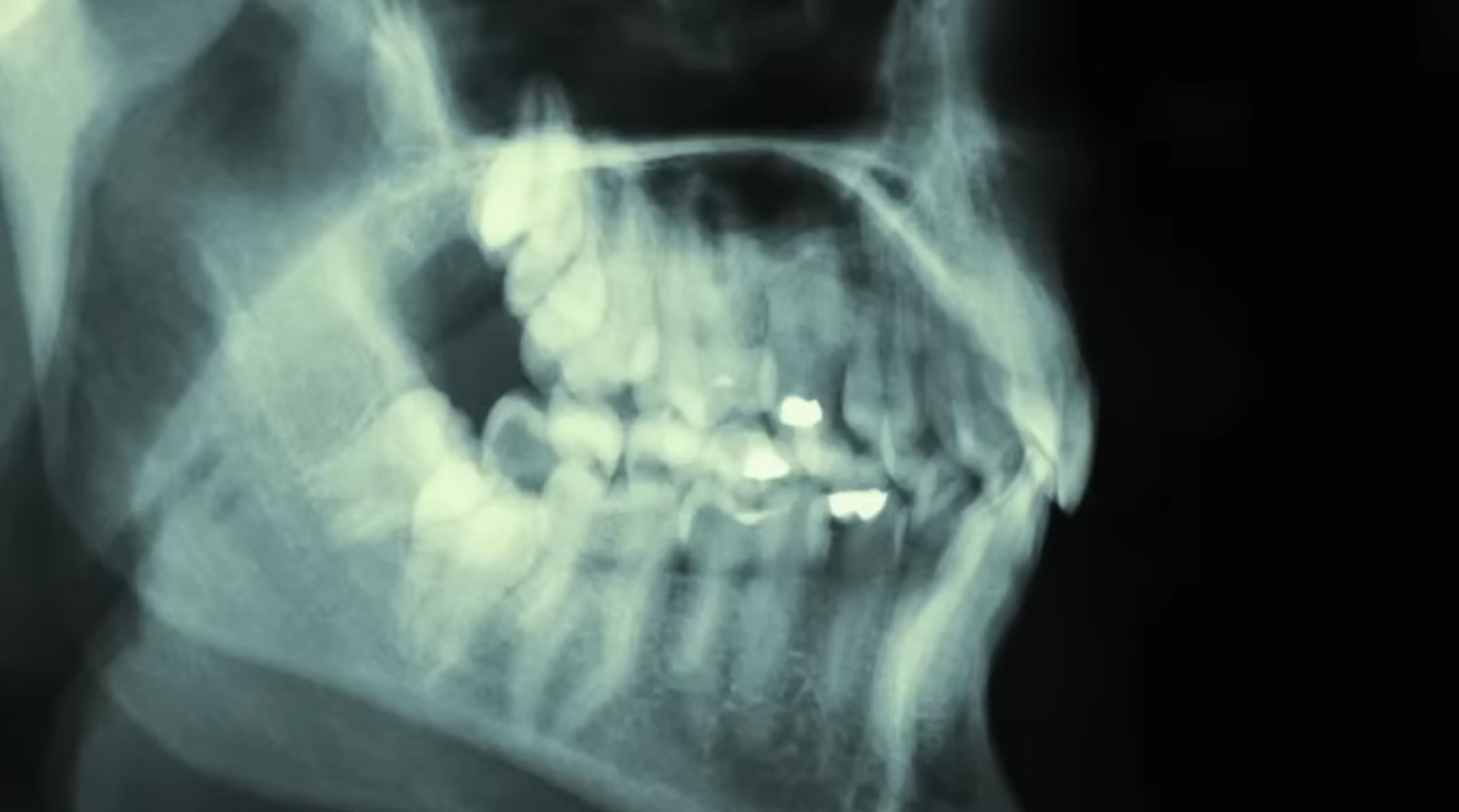
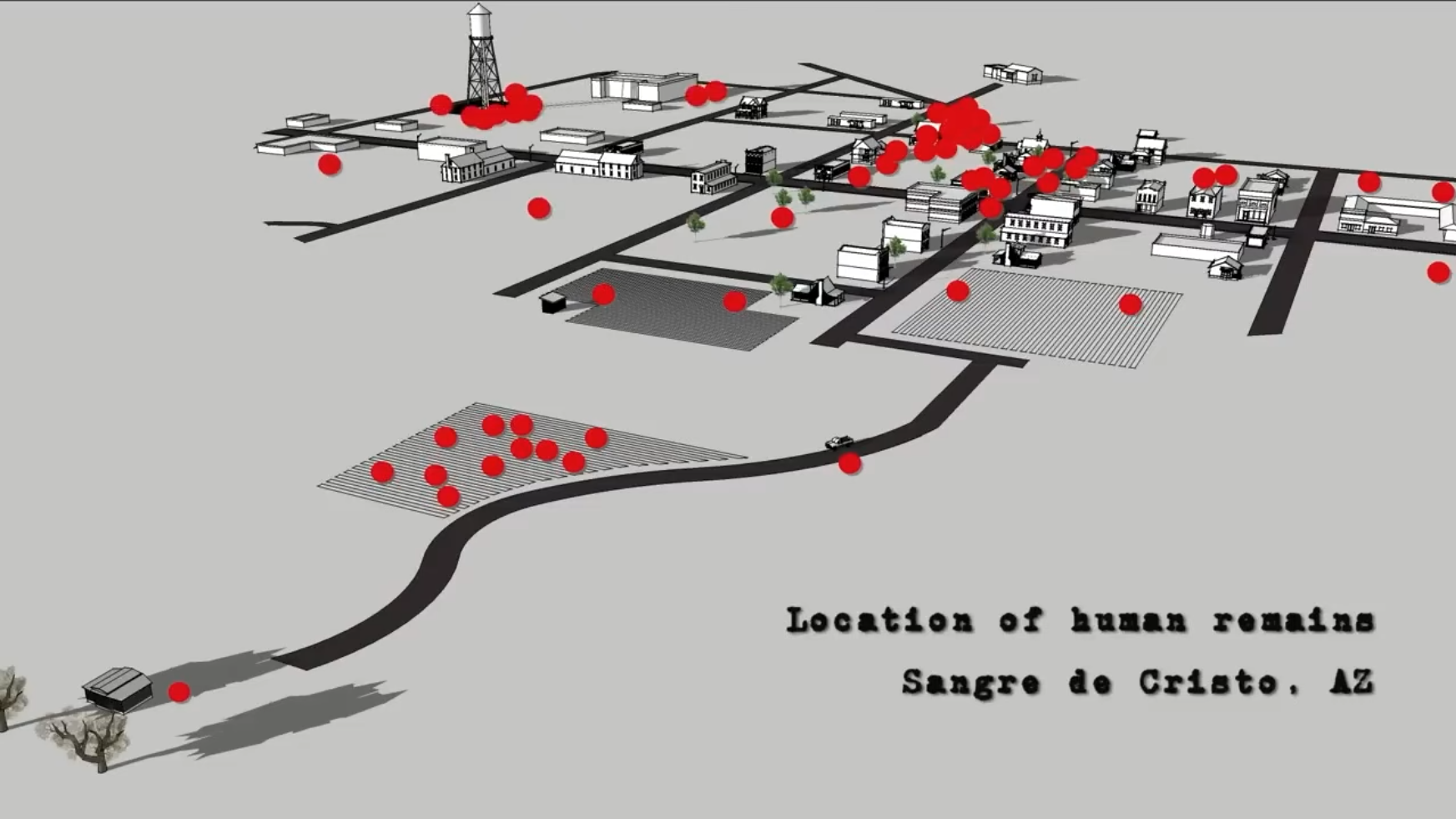
"They could only do forensics on seven partial corpses that were intact enough to be tagged and ID'd. When pressed about identifying the other remains, the coroner said on the stand: 'How do you run DNA tests on 20 square blocks of bloody sand?'"
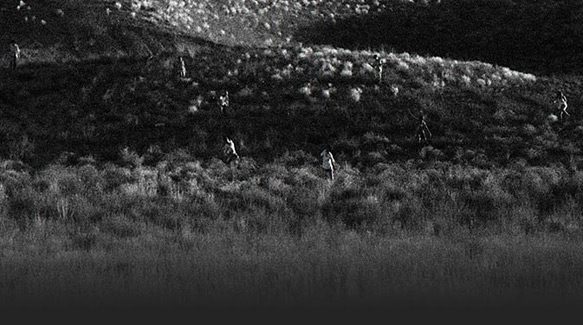
The first photo in the roll is my favourite. At sunset at the southern edge of town, after being attacked by the zombie of his friend, Salazar stumbles outside and turns to the south. The sunset dimly illuminates specks of trees and grass on the otherwise unremarkable hill - when we first see it, we don't understand why he took the photo.
But then, when the film shows the photo in more detail, something chilling emerges. The tree at the top of the hill is revealed to be a sprinting human figure. It's a shocking sight. But then the photo becomes slowly, horribly clear. The dozens of dots that scatter the harmless landscape are not, as we thought, sticks and trees.
They're all zombies. All of them.
But let's go back a little.
At the start of the film, the massacre is a mystery, one that the bigoted law enforcement are all too happy to pin on the easiest target. As an audience, you want there to be more to the story. You know there's more to the story.
And then wait - evidence! When it's revealed that Salazar took photos of the night - a numbered roll of film, a countdown - you, the viewer, are gratified. Of course there was more to the story. And you're watching a horror film, so you're more ready than the characters to believe in zombies.
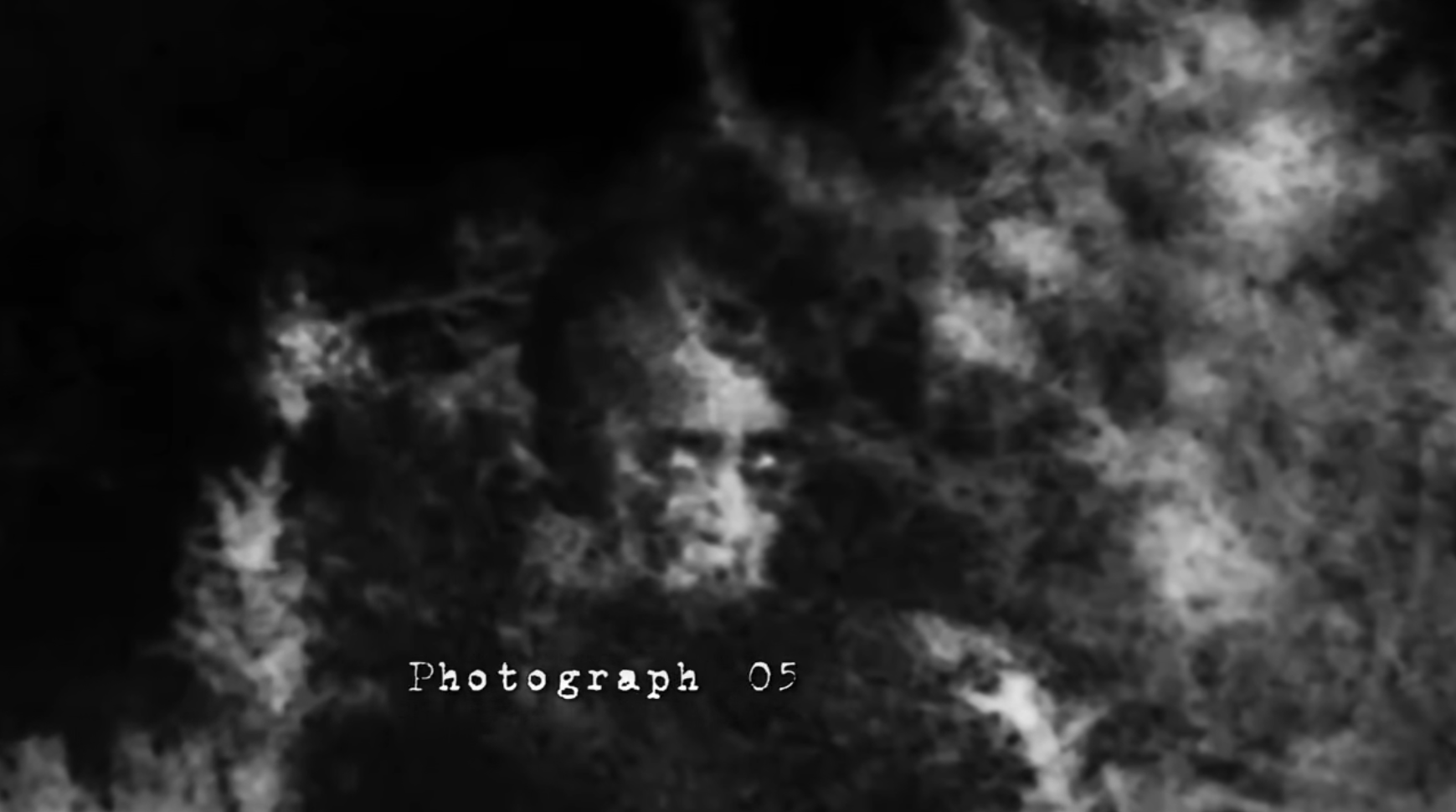
The movie withholds information and hints at violent answers. The photos, sprinkled piecemeal throughout the film, are used to tease you with certainty. Hard evidence. The stupid and stubborn law enforcement are frustrating - the photos show the truth.
This way, the film sets up the viewer to sympathise with Francisco Salazar's side of the story. Even the photos themselves are blurry, unclear - unsatisfying. The only relief comes from listening to news reports and interviews with those who also sympathise with Salazar's point of view, who also want to see the truth come to light.
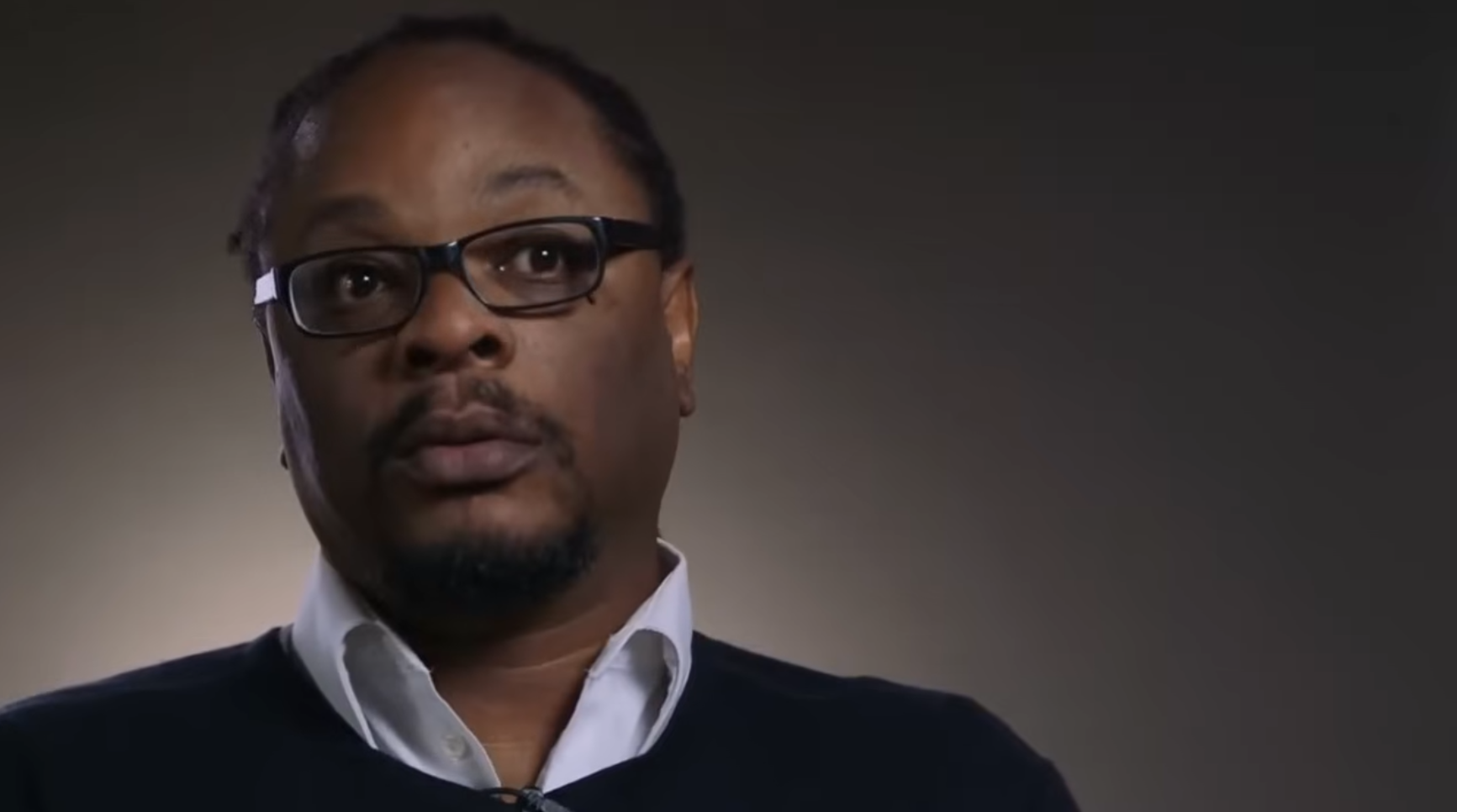
By hinting information - by leaving things unclear, by scattering the details - the viewer's imagination fills in the gaps. This makes it a lot more scary! (Me telling you this has ruined the trick a little, though, so I hope you watched it first). But you are also encouraged, by the movie, to think, and to ask questions.
...hence this blog post.
The movie holds no final certainty, however. The great flaw of every character except Francisco is the fact that they all superimpose their prior perspectives on the evidence, and each only sees what they want to see.
To shy away from thinking about hard political issues, in the year 2025, is moral suicide. Inaction is compliance. To deny reality leaves you blind to the kind of world you're living in. You have to know the kind of world you're living in, in order to navigate it safely and with kindness.
"Why did Francisco take the photos? The better question is - why not? You are capturing moments in time that you are the only person who - it's - it's a moral imperative, almost."
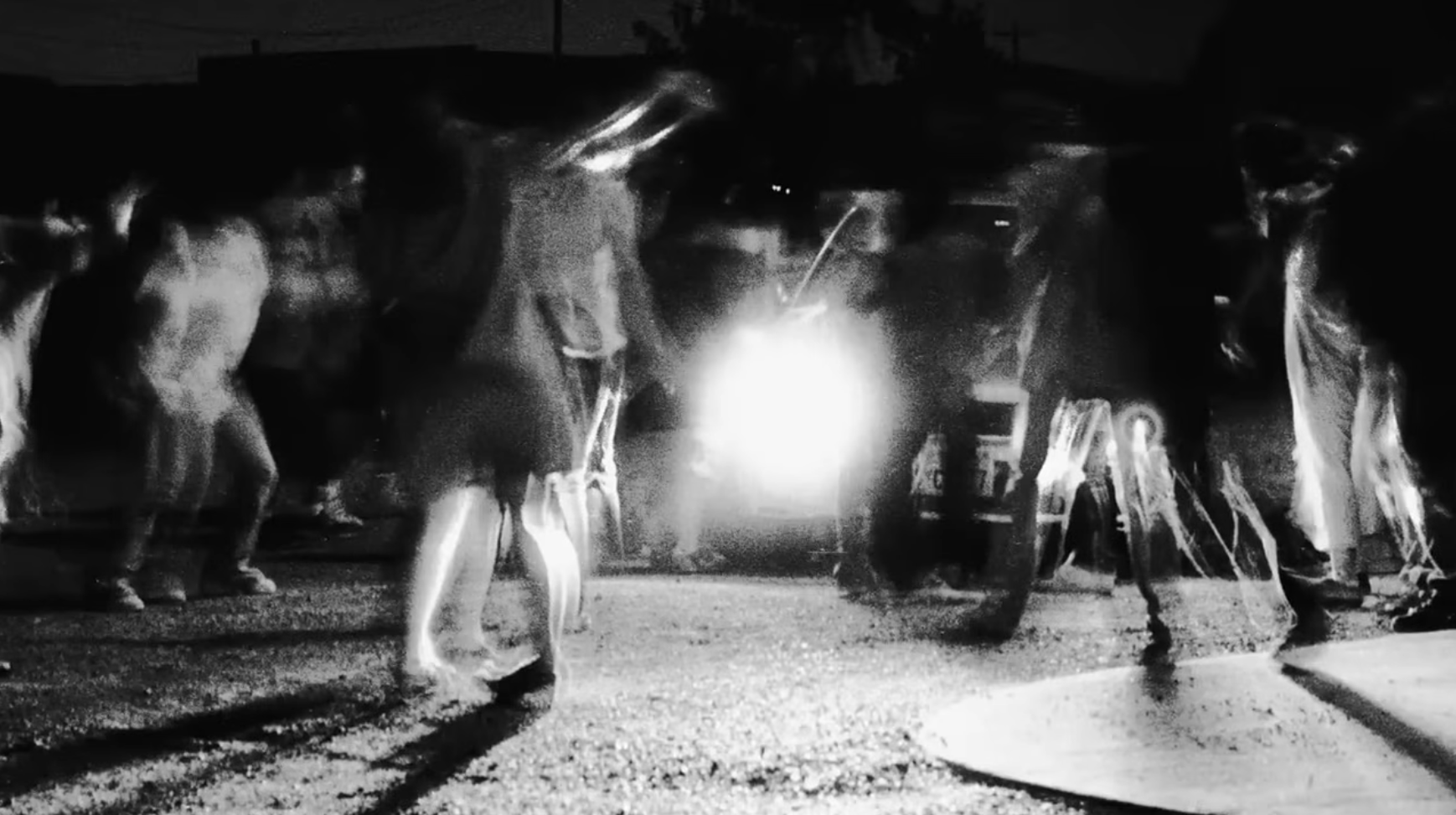
Throughout the movie, the racist characters and police in interviews make frequent mention of the imaginary hordes of illegal, bloodthirsty immigrants swarming the border. They talk about these people as if they are a mindless army - and not just regular people in search of a better life. This comparison of Mexican immigrants to the zombie horde is an uncomfortable parallel.
It's hard to ignore this comparison. The question is: was it deliberate? By framing Francisco as a sympathetic character, the image of an immigrant as a mindless zombie falls apart. But then it's revealed that Francisco was bitten after all, and becomes a zombie in the end anyway.
"Have you ever actually seen the border fence? It's 20ft high. Corrugated steel. Razor wire in some places. Anyone - with any regard for human life - would stay the hell away from that fence."
By making the racist characters shallow, mocking stereotypes, the movie seems to want to critizice the irrational fear of immigration. But at the end, it's revealed that what happened in this town was not an isolated incident, and that there are far more zombies coming from the border, from the south.
"They were always heading in one direction. They were headed north."
Was this an easy grab for relevant cultural fears, and thus an accidental justification of xenophobia? If so, it's a strange choice. Franscisco is a sympathetic and tragic character, whose perspective in the story is one of absolute truth. We feel for him, as an audience. We protest against the stereotypically racist police, and their views of immigrants as a 'mindless horde'. Why create a subtextual comparison that seems to match those views?
Was this comparison deliberately targeted to make white audiences uncomfortable, and reckon with our internal xenophobia? By framing Francisco with such empathy, it creates discomfort when the subtext of the movie goes against our previously assumed sympathies. It feels bad - 'I'm not racist', we seem to want to say, in protest against the film itself. 'I don't believe that'. By making the comparison subtext, the movie tells us, 'Ah, but you do, because I said so'. We're forced to look hard at ourselves, and see if we really do. We're meant to question it. Just because it's the end of the movie doesn't mean we're done looking for the truth.
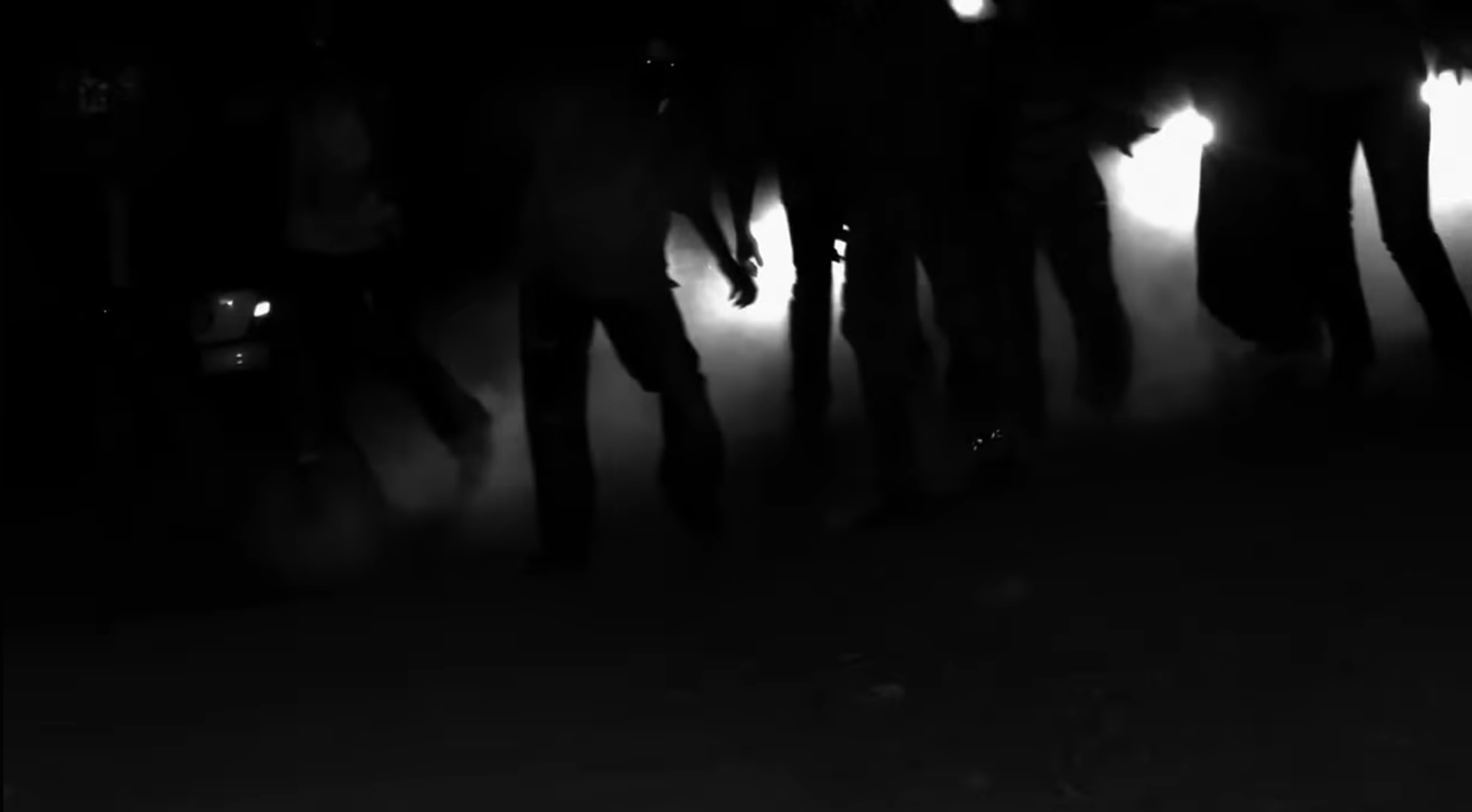
Then again - fuck it - maybe the zombies really are just zombies. Maybe the point isn't what they represent. Maybe the more important thing to analyse is the instinctive reaction of the police, the journalist, and the community close to the town.
Let's say they are just zombies.
Zombies are a very human horror. Among other things, zombies represent the fear of other humans. I usually hate zombie movies! The unnatural feeling of a person with no other goal except to eat other people alive - the gore is usually just too much for me.
I do think the gore in 'Savageland' was appropriate, though. As an audience, we relate so heavily to Francisco because we can envision the terror of moving across a zombie-ridden town. Fleeing in the dark, while human-shaped monsters stumble aggressively after you, unrelenting. Holding the hand of a trapped kid through the bars of a window, trying to comfort her as the zombies eat her, unable to free her or prevent it. The blood and gore makes it visceral for us in a way that the interviews and documents do not.
It is easy, in the modern day, to scroll past article headings and feel numb. A visceral reminder of injustice is sometimes required in order to care. We're empathetic animals. Statistics and articles can only go so far - I knew a person in university, in one of my courses, who would shy away from discussing political issues except to say that 'I would listen if you could give me the statistics'. But when given the statistics, they didn't listen. They were using intellectualism as an excuse not to feel the emotions raised by the issues.
It is easier to ignore words than a photo.
The police and media, despite the evidence, are more willing to believe an immigrant committed an impossible crime rather than that zombies exist. The journalist is more willing to believe the massacre was committed by the racist police themselves, rather than that zombies exist.
The audience, however, is more willing to believe zombies exist rather than any of the other possibilities, because those other things are what the audience fears.
The overly American style of documentary, with dramatic cuts, emotional music, and punchy sounding quotes layered over each other (as well as a lack of any real 'evidence' apart from Francisco's photos) helps to frame the American fears that 'Savageland' is accessing. First, the American cultural fear of 'illegal' immigrants - discomfort and racism masquerading as patriotism. Second, the justified fear of the American justice system - an unfair system of biased juries and racist judges.
These are the fears that 'Savageland' uses zombies to incite. The audience needs to believe it was zombies. It is easier to believe it was zombies. It is easier to watch a movie about zombies rather than a real documentary about the systematic and cultural xenophobia of these border towns, and the cost in human lives caused by people in positions of power.